- Pillar No 101, Patlipath, Beside Digha-Aiims Elevated Road, Abhimanyu Nagar, Patna

Visiting Hours
| Mon - Fri: | 8:00 am - 8:00 pm |
| Saturday: | 9:00 am - 6:00 pm |
| Sunday: | 9:00 am - 6:00 pm |
Gallery Posts






| Mon - Fri: | 8:00 am - 8:00 pm |
| Saturday: | 9:00 am - 6:00 pm |
| Sunday: | 9:00 am - 6:00 pm |
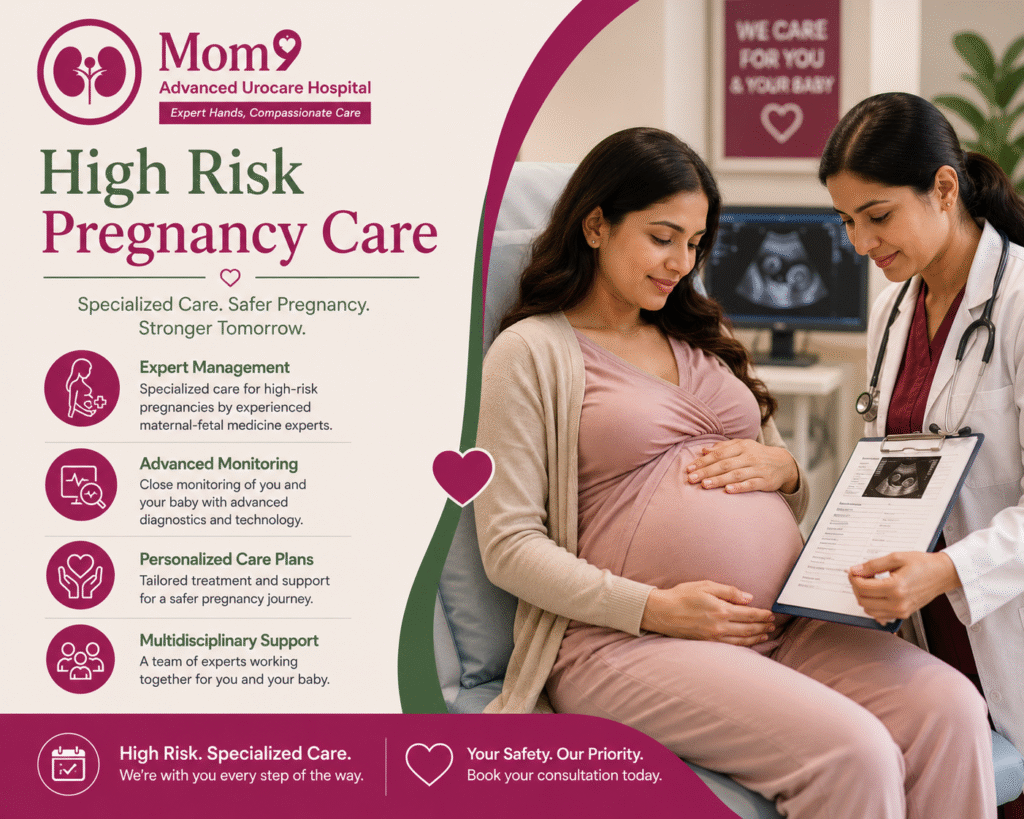
High-Risk Pregnancy Care at MOM9
Some pregnancies need closer monitoring—and that doesn’t mean something “will go wrong.” It means you deserve a tighter plan, better surveillance, and faster action if needed.
MOM9’s high-risk pregnancy care is built around specialist-led decision making, careful fetal monitoring, and proactive management of complications.
What Makes a Pregnancy “High Risk”?
You may be considered high risk if you have:
What Care Typically Includes
Your Goal: A Safe Delivery Plan
High-risk care is about reducing avoidable risk—so you can reach a safer delivery with fewer last-minute surprises.
Why MOM9
MOM9 positions maternity and women’s health services alongside advanced clinical care—ideal for pregnancies that require deeper monitoring and coordinated planning.
FAQ
Q. Can a high-risk pregnancy become normal later?
Sometimes—if the risk factor resolves or stabilizes. But continued monitoring is still important.
Your health deserves specialised attention. At Mom9, we combine advanced medical expertise with compassionate care to ensure a safe, confident and comfortable experience for every woman, mother, baby and family.
| Mon - Fri: | 8:00 am - 8:00 pm |
| Saturday: | 9:00 am - 6:00 pm |
| Sunday: | 9:00 am - 6:00 pm |




Copyright 2025 mom9urocare.com. All Rights Reserved